

When comparing dash cams, a 170° viewing angle may sound automatically better than 140°. After all, a bigger number means the camera can see more of the road.
But wider doesn't always mean better.
A 170° dash cam captures more activity toward the sides of your vehicle, while a 140° lens generally provides a more focused view of the road ahead with less extreme wide-angle distortion.
The short answer: choose 140° if you want balanced forward coverage and a more focused image; choose 170° if you prioritize maximum surrounding context.
If you're new to this specification, our guide to field of view (FOV) in a dash cam explains how viewing angles work in more detail.
140° vs 170° Dash Cam: Quick Comparison
| Feature | 140° Dash Cam | 170° Dash Cam |
|---|---|---|
| Road Coverage | Wide | Extra wide |
| Forward View | More focused | Broader |
| Adjacent Lanes | Good | Better |
| Intersection Coverage | Good | Excellent |
| Objects Ahead | Appear relatively larger | Appear relatively smaller |
| Edge Distortion | Usually lower | More likely |
| Highway Driving | Excellent | Very good |
| City Driving | Very good | Excellent |
| Best For | Balanced everyday recording | Maximum surrounding context |
In simple terms:
140° = more focused coverage
170° = wider coverage
Neither is universally better.
What's the Real Difference Between 140° and 170°?
A 140° dash cam already captures a wide section of the road ahead, including your lane and much of the neighboring traffic.
A 170° lens extends the view farther toward both sides.
Imagine approaching a busy intersection.
With a 140° dash cam, the road ahead, traffic lights, nearby vehicles, and neighboring lanes may all be clearly visible.
With a 170° dash cam, more of the sidewalks, side streets, pedestrians, cyclists, and vehicles approaching from the sides may enter the frame.
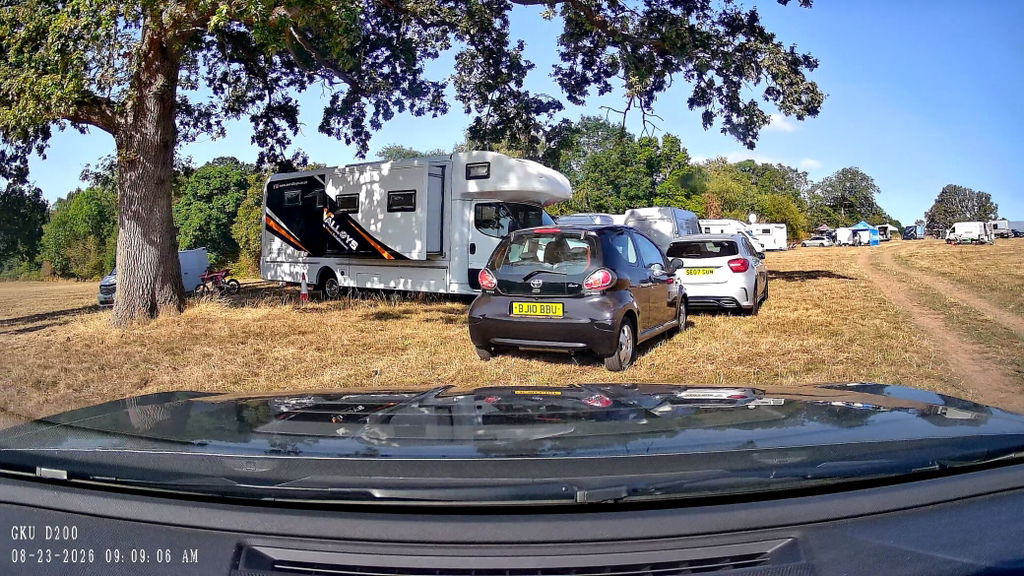
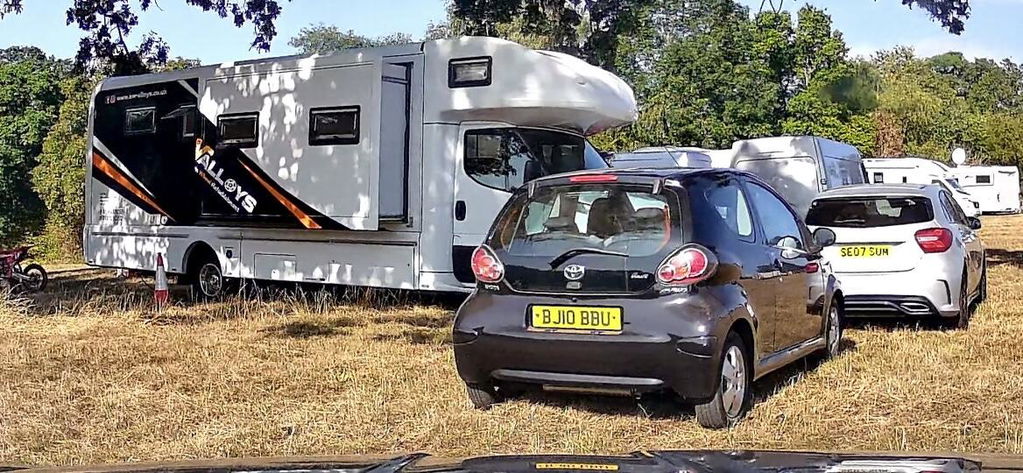
The trade-off is that the wider scene has to fit into the same video frame. This means objects directly ahead can appear relatively smaller with a 170° lens than with a 140° lens.

140° vs 170° Coverage Comparison
Use the overhead/coverage image showing:
-
140° = 70° + 70°
-
170° = 85° + 85°
-
More Focused View vs Wider Coverage
Does a 170° Dash Cam Capture More Detail?
Not necessarily.
A wider field of view captures more of the scene, but that doesn't automatically mean it captures more detail.
Imagine two dash cams that both record at 3840 × 2160 resolution.
One uses a 140° lens, while the other uses a 170° lens.
Both videos contain the same total number of pixels, but the 170° camera spreads those pixels across a wider scene. As a result, a distant vehicle may occupy fewer pixels within the frame.
That's why viewing angle and dash cam resolution should be considered together.
Field of view determines how much you see. Resolution helps determine how much detail exists within that view.
And resolution isn't the whole story either. Sensor quality, lens sharpness, bitrate, exposure, and image processing all affect the final footage.

Wider View ≠ More Detail
Use the front-road comparison image:
-
140°: front vehicle appears larger
-
170°: front vehicle appears smaller but more surroundings are visible
-
Main message: Wider View ≠ More Detail
-
Supporting text: Same Resolution. Different Pixel Distribution.
140° vs 170° for License Plate Capture
A narrower field of view can make vehicles directly ahead appear larger in the frame when other camera specifications are equal.
That can potentially give a license plate more pixels within the image.
However, this does not mean a 140° dash cam will always capture license plates better than a 170° camera.
License plate clarity also depends on:
-
Resolution
-
Vehicle distance and speed
-
Image sensor
-
Shutter speed and exposure
-
HDR or WDR
-
Lens quality
-
Video bitrate
-
Lighting conditions
-
Image processing
For example, capturing a stationary plate during daylight is very different from trying to read a vehicle passing at highway speed at night.
For a deeper explanation, read How to Capture Clear License Plates with a Dash Cam.
Which Is Better for City, Highway, and Parking?
The most useful viewing angle can depend on where you drive most often.
City Driving: 170° Has an Advantage
Busy city environments often involve activity coming from multiple directions.
A wider 170° view can help capture more:
-
Intersections
-
Pedestrians and cyclists
-
Side streets
-
Multiple traffic lanes
-
Vehicles turning across your path
If maximum side-to-side context matters, 170° can be particularly useful.
Highway Driving: 140° Offers a Good Balance
On highways, important events are more likely to happen directly ahead, in neighboring lanes, or during merging and overtaking.
A 140° lens can provide plenty of road coverage while keeping the forward scene relatively focused.
Speed also becomes important here. Even the ideal FOV cannot guarantee clear footage of fast-moving vehicles, which is why frame rate and exposure also matter.
Parking: Wider Can Help, But It Isn't 360°
A 170° front camera can capture more activity around the front corners of your vehicle, such as cars entering nearby spaces or people walking past.
But remember:
170° does not mean 360° protection.
If you want more complete coverage, adding a rear camera can often make a bigger difference than simply choosing a wider front lens.

City Driving vs Highway Driving
-
Left: CITY DRIVING — 170°
-
More surrounding context
-
Intersection, pedestrians, cyclists, multiple lanes
-
-
Right: HIGHWAY DRIVING — 140°
-
Balanced forward coverage
-
Front traffic, adjacent lanes, merging vehicles
-
-
Bottom message: Different roads. Different priorities.
Does a 170° Lens Cause More Distortion?
Potentially, yes.
Very wide-angle lenses can create more visible distortion toward the edges of the frame. Lane markings, buildings, vehicles, and roadside objects may appear slightly stretched or curved.
However, FOV alone doesn't determine distortion.
Lens design, optical quality, software correction, sensor cropping, and image processing also affect the result.
So instead of comparing only the number on the specification sheet, it's worth checking real-world sample footage whenever possible.
Don't Choose a Dash Cam Based on Viewing Angle Alone
Viewing angle is only one part of dash cam video quality.
A better way to evaluate a camera is:
FOV + Resolution + Sensor + Lens + Bitrate + Frame Rate + Image Processing
For example, a 170° camera may capture more road, but that advantage matters less if the footage is heavily compressed or blurry at night.
The CMOS image sensor affects how the camera captures light and image information, while video bitrate influences how much detail can be preserved in the recorded video.
In other words:
The widest viewing angle isn't automatically the best dash cam. The goal is to find the right balance between coverage and usable detail.
140° vs 170° Dash Cam: Which Should You Choose?
Choose 140° if you:
-
Want balanced forward road coverage
-
Mostly drive on highways or suburban roads
-
Prefer a more focused image
-
Want less extreme wide-angle distortion
-
Prioritize events directly ahead
Choose 170° if you:
-
Frequently drive in cities
-
Want wider intersection coverage
-
Drive on multi-lane roads
-
Want to capture more activity from the sides
-
Prioritize surrounding context
For most drivers, either viewing angle can work well.
The better question isn't simply:
Which number is bigger?
It's:
Which viewing angle gives you the coverage you need while still delivering clear, usable footage?
If you're comparing other dash cam specifications as well, our Dash Cam Buying Guide 2026 covers the main features worth considering before you buy.
Frequently Asked Questions
Is 140° wide enough for a dash cam?
Yes. A 140° dash cam can provide broad coverage of the road ahead and neighboring lanes while maintaining a relatively focused view. For many drivers, it offers an excellent balance for everyday use.
Is 170° better than 140° for a dash cam?
Not necessarily. A 170° camera captures more peripheral activity, while a 140° camera provides a more focused forward view. The better option depends on your driving environment and priorities.
Does a wider dash cam angle mean better video quality?
No. Viewing angle determines how much of the scene is captured. Overall video quality also depends on resolution, sensor quality, lens quality, bitrate, exposure, and image processing.
Is 170° better for city driving?
It can be. The wider view is useful for capturing intersections, pedestrians, cyclists, neighboring lanes, and vehicles approaching from the sides.
What is the best viewing angle for a dash cam?
There is no single best viewing angle for every driver. Both 140° and 170° can provide useful coverage—the key is balancing field of view with image detail and the overall quality of the camera.
0 comments