

You check your dash cam footage after a drive, only to find that license plates look soft, moving cars appear smeared, or the entire video seems less sharp than expected.
Does that mean something is wrong with your dash cam?
Not necessarily.
Blurry dash cam footage can be caused by anything from a dirty windshield to motion, low-light conditions, camera vibration, or video compression. In many cases, the problem is easy to identify and fix.
Here’s how to figure out what’s causing the blur — and what you can do about it.
What Kind of Blur Are You Seeing?
Before changing any settings, first look at how the footage appears blurry.
Different types of blur usually point to different causes.
| What You See | Likely Cause |
|---|---|
| The whole image looks soft | Dirty lens, windshield, or focus issue |
| Moving vehicles or plates look smeared | Motion blur |
| Video looks clear when parked but blurry while driving | Camera vibration or motion |
| Night footage looks soft or noisy | Low-light conditions |
| Video looks blurry only on your phone | Preview or compression |
| Footage looks blurry after zooming in | Digital zoom / limited image detail |
Once you know which type of blur you're dealing with, troubleshooting becomes much easier.
1. The Lens or Windshield Is Dirty
This is one of the simplest — and most common — reasons dash cam footage looks blurry.
Your dash cam is recording through two surfaces:
-
The camera lens
-
Your windshield
Dust, fingerprints, grease, condensation, or a thin layer of haze can reduce clarity.
The problem is often even more noticeable at night because headlights and streetlights can scatter across a dirty windshield.
How to fix it
Clean the dash cam lens gently with a microfiber cloth and clean both the inside and outside of the windshield.
If the dash cam is newly installed, also check whether there is still a protective film on the lens.
It sounds obvious, but it happens more often than you might think.
2. The Dash Cam Is Vibrating While You Drive
If the footage looks sharp while your car is parked but softer once you start driving, the camera mount may be part of the problem.
A slightly loose dash cam can vibrate when driving over bumps or rough roads. Even small movements can make fine details such as road signs and license plates harder to see.
How to fix it
Check that:
-
The mount is firmly attached to the windshield
-
The camera is securely connected to the mount
-
The mounting surface is clean
-
The dash cam does not move easily when lightly touched
One useful test is to compare footage recorded while parked with footage from the same camera while driving.
If only the driving footage appears blurry, vibration or motion may be contributing to the problem.
3. Motion Blur Is Affecting Moving Objects
Sometimes the video itself looks clear, but license plates become blurry when another car passes by.
This is usually not the same as an out-of-focus camera.
It may simply be motion blur.
A dash cam records a constantly moving scene. Your own vehicle is moving, other vehicles are moving, and roadside objects can pass through the frame very quickly.
Motion blur becomes more noticeable when:
-
Driving at higher speeds
-
Another vehicle is moving in the opposite direction
-
Lighting is poor
-
An object passes close to the camera
This is also why a license plate may look readable in one frame but blurry in the next.
Frame rate can affect how motion appears, although it is only one part of overall video quality.
For more on this, see:
30FPS vs 60FPS Dash Cam: Does Frame Rate Matter?
4. Low Light Can Make Footage Look Softer
Dash cams have a much harder job at night.
When there is less available light, the camera has to work harder to produce a usable image. As a result, you may notice:
-
Less fine detail
-
Softer moving objects
-
More visible image noise
-
Harder-to-read license plates
This does not always mean the camera is defective.
Low-light performance depends on many factors, including the image sensor, lens, processing, exposure, and the amount of light available in the scene.
Modern sensors such as Sony STARVIS 2 are designed to improve low-light performance, but no dash cam can completely eliminate the challenges of recording fast-moving vehicles in dark environments.
Learn more:
What Is Sony STARVIS 2? Everything You Need to Know Before Buying a Dash Cam
5. You May Be Watching a Compressed Preview
Sometimes the original recording is clear — but the version you're watching isn't.
Dash cam apps may use lower-quality previews so videos load faster on your phone.
Video quality can also be reduced after footage is:
-
Sent through messaging apps
-
Uploaded to social media
-
Screen-recorded
-
Exported multiple times
-
Compressed by editing software

How to check the real quality
The best way to judge dash cam footage is to look at the original file saved on the microSD card.
Transfer the original video to a computer and view it at its native resolution before deciding whether the camera itself is producing blurry footage.
Why Can 4K Dash Cam Footage Still Look Blurry?
This is a common misunderstanding.
4K resolution does not guarantee that every object or license plate will appear perfectly sharp in every frame.
4K describes the resolution of the entire video image.
Actual detail also depends on factors such as:
-
Distance from the vehicle
-
Driving speed
-
Relative movement
-
Lighting
-
Exposure
-
Camera angle
-
How large the object appears in the frame
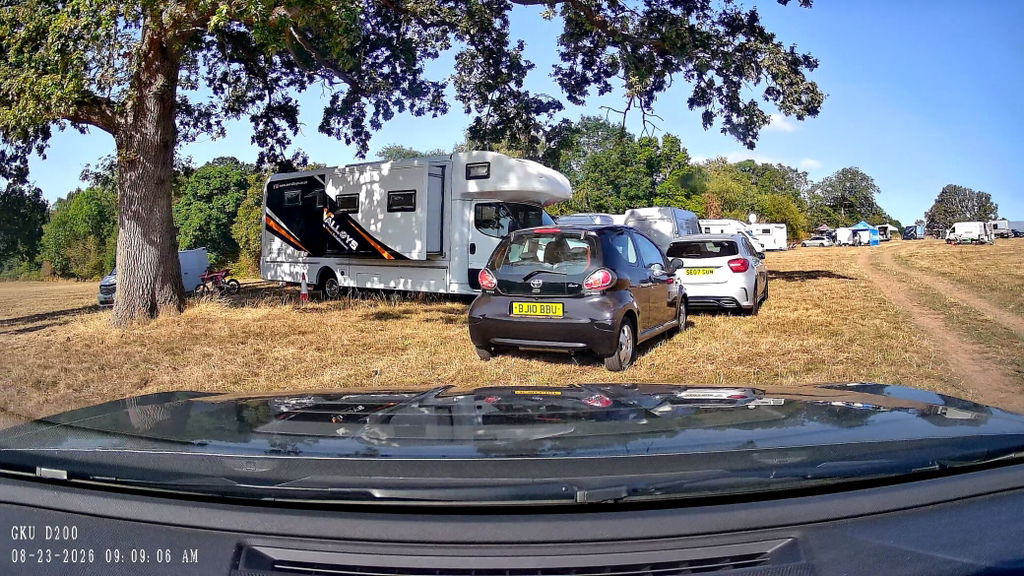
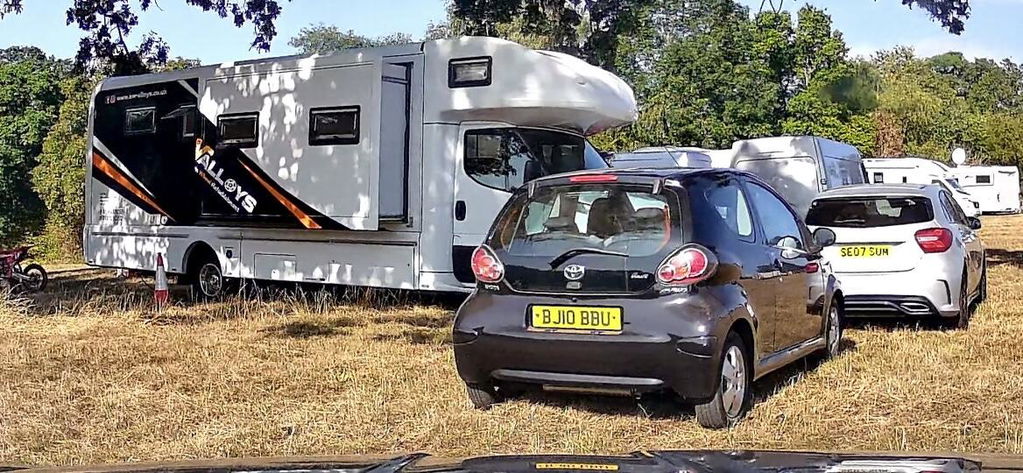
For example, if a license plate occupies only a tiny part of the video frame, zooming in several times will eventually make it look pixelated — even if the original video was recorded in 4K.
Higher resolution gives the camera more image information to work with, but it cannot completely overcome motion, distance, or difficult lighting.
For a deeper explanation, see:
What Dash Cam Resolution Do You Need? 1080P vs 2K vs 4K Explained
and
True 4K vs 4K Dash Cam: What's the Difference and Does It Really Matter?
Quick Checklist: How to Fix Blurry Dash Cam Footage
If your dash cam suddenly looks blurry, try these steps first:
-
Clean the camera lens.
-
Clean the windshield inside and out.
-
Check for protective film on the lens.
-
Make sure the dash cam mount is secure.
-
Confirm that you're using the intended recording resolution.
-
Check the original microSD card footage instead of only the app preview.
-
Compare parked footage with footage recorded while driving.
-
Compare daytime and nighttime recordings.
These simple checks can help you quickly determine whether the issue comes from installation, viewing conditions, motion, or the recording itself.
Why Are License Plates Sometimes Blurry?
License plates are one of the most difficult details for a dash cam to capture consistently.
Clarity can change depending on:
-
How far away the vehicle is
-
How fast both vehicles are moving
-
Lighting conditions
-
Headlights
-
Viewing angle
-
The size of the plate within the video frame
So even if the overall video looks sharp, a fast-moving license plate may still appear blurry in some frames.
For more tips specifically about plate readability, read:
How to Capture Clear License Plates with a Dash Cam
FAQ
Why is my dash cam blurry all the time?
If the entire image looks blurry in both daytime and nighttime footage, start by checking the lens, windshield, protective film, mount, and recording settings.
If the original files still look consistently out of focus after these checks, further troubleshooting may be needed.
Why is my dash cam clear during the day but blurry at night?
Night recording is more difficult because less light is available.
That can make moving objects look softer and introduce more visible image noise. Headlights and other bright light sources can also make details harder to see.
Will 4K fix blurry dash cam footage?
Not by itself.
4K provides more image detail, but motion, distance, vibration, poor lighting, and exposure can still make parts of the footage appear blurry.
Why does my dash cam footage look blurry on my phone but clear on my computer?
The app may be showing a compressed or lower-resolution preview.
For the most accurate image-quality check, always compare the original video file stored on the microSD card.
Final Thoughts
Blurry dash cam footage does not automatically mean your camera has poor image quality.
Start with the basics: clean the lens and windshield, check the mount, confirm your recording settings, and inspect the original video file.
Then look at when the blur happens.
If it mainly appears while driving, motion or vibration may be the cause. If it mainly appears at night, lighting may be the bigger factor. If the original file looks clear but your phone preview does not, compression may be responsible.
The key is to identify the type of blur first — then fix the actual cause.
Комментариев: 0